The 'Real Me' Is a Brand Strategy: How Celebrity Vulnerability Became a Performance
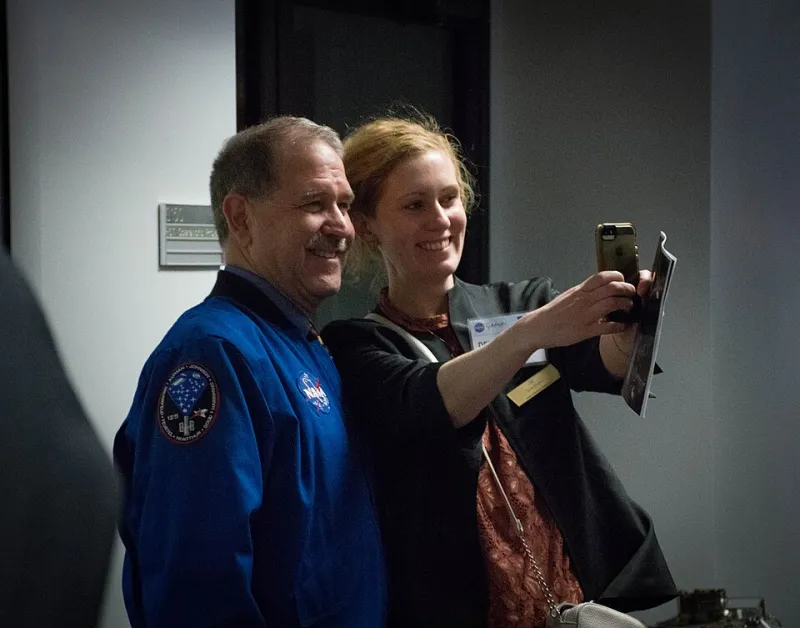
Photo: NASA Goddard Space Flight Center from Greenbelt, MD, USA, Public domain, via Wikimedia Commons
There's a specific kind of celebrity content that hits different at 11 p.m. on a Tuesday. No makeup. Soft lighting that somehow still looks cinematic. A shaky voice talking about "going through it." Within hours, it's everywhere — Twitter threads, entertainment blogs, fan edits set to Phoebe Bridgers. The comments flood in: she's just like us. And maybe she is. But the odds are pretty good that someone with a ring light and a content calendar had a hand in that moment too.
Welcome to the authenticity paradox — where the most strategically engineered moments in celebrity culture are the ones designed to look completely unplanned.
The Business of Seeming Real
Relatability didn't just become a cultural value overnight. It's been building since reality TV exploded in the early 2000s, when audiences got their first real taste of stars "without the gloss." But the smartphone era turbocharged everything. Suddenly celebrities had a direct line to fans, bypassing publicists and press junkets entirely. Instagram Stories, TikTok, BeReal — each new platform promised a rawer, more immediate version of fame. And each one was immediately colonized by marketing strategy.
Today, major celebrities employ entire teams dedicated to what the industry quietly calls "organic content" — posts and videos engineered to feel spontaneous. That includes social media managers who specialize in mimicking off-the-cuff energy, PR firms that time emotional disclosures around album drops or project announcements, and stylists who create "no-makeup makeup" looks specifically for candid-style shoots. The infrastructure behind a single "just woke up" selfie can be genuinely staggering.
"Authenticity is the new aspirational," one entertainment marketing consultant told The Hollywood Reporter last year. "In the '90s you wanted your client to look untouchable. Now you want them to look like your neighbor."
TikTok's Slip-Up Industrial Complex
Nothing has accelerated the performance of realness quite like TikTok. The platform's casual, lo-fi aesthetic created a permission structure for celebrities to act unpolished — which, predictably, they've figured out how to fake at scale.
The "accidental" celebrity TikTok is practically its own genre now. A star "forgetting" the camera was on. A behind-the-scenes moment that reveals something just vulnerable enough to trend without actually being damaging. A carefully timed "hot mic" clip that drops the week a new project needs attention. These aren't slip-ups. They're precision instruments.
Take the wave of celebrities who've mastered the "chaotic" TikTok aesthetic — think rambling voice-overs, self-deprecating humor, and the kind of messy-house background that communicates I'm too busy being creative to clean. It reads as genuine. It's also, increasingly, a documented PR approach. Talent agencies now coach clients on platform-specific authenticity codes: what kind of "mess" is charming versus off-putting, which personal struggles are safe to share, and how to pace emotional disclosures for maximum engagement without long-term brand damage.
Reality TV Confessionals and the Illusion of Confession
If TikTok is the new frontier of performed authenticity, reality TV is the original laboratory. The confessional booth — that staple of shows from The Real World to The Bachelor to Vanderpump Rules — was always framed as the space where people said what they really thought. In practice, producers have long guided those segments with pointed questions, re-shoots, and selective editing.
But audiences' relationship with that manipulation has shifted. Fans of shows like The Real Housewives franchise openly discuss producer involvement, cast members' "villain edits," and storylines that feel constructed. And yet viewership stays strong — sometimes stronger. It turns out people don't necessarily need to believe something is real to enjoy the performance of realness. The parasocial hit lands either way.
This is the core tension that makes the authenticity paradox so durable: audiences simultaneously know they're being played and still feel the emotional payoff. The brain doesn't fully distinguish between a genuine confession and a well-executed simulation of one.
When the Mask Slips — For Real
Of course, sometimes actual unfiltered moments do break through. A celebrity says something genuinely off-script. A live stream glitches at the wrong moment. A feud plays out in real time before the PR team can spin it. And the internet's reaction is almost always more intense than anything manufactured could produce, precisely because audiences can feel the difference.
Those moments tend to go viral in a different way — less "aww" and more "oh." They remind everyone that there's still a real person underneath the content strategy, which can be humanizing or catastrophic depending on what gets revealed.
The irony is that these genuine slip-ups often end up inspiring the next round of manufactured authenticity. A star has a real breakdown on camera; six months later, other celebrities are engineering their own "breakdowns" with suspiciously good lighting.
So What Do We Actually Want?
It's worth asking what audiences are really chasing when they engage with behind-the-scenes celebrity content. Partly it's connection — the primal desire to see the person behind the persona. Partly it's validation, the comfort of knowing that even the most successful, beautiful, famous people struggle. And partly, honestly, it's drama. We want the curtain to slip.
The entertainment industry has gotten very good at feeding all three hungers simultaneously while controlling exactly how much curtain actually moves.
What's changed most recently is the meta-awareness on both sides. Celebrities openly joke about their "brand" and "personal PR." Fans create entire TikTok accounts dedicated to deconstructing celebrity authenticity theater. There's a growing audience not just for the performance of realness, but for the analysis of that performance.
In a weird way, that might be the most authentic thing happening in celebrity culture right now — the collective, half-amused acknowledgment that we're all in on the bit together. Whether that counts as genuine connection or just a more sophisticated layer of the same illusion is, genuinely, up for debate.
What's not up for debate: the next "unfiltered" moment is already in the content calendar.