Paid to Feel Seen: The Booming Economy of Fake Closeness With Creators You'll Never Actually Meet
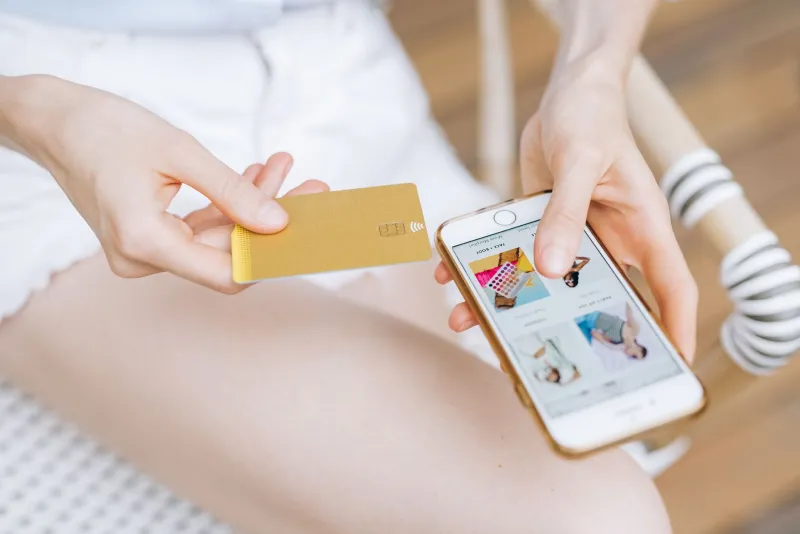
There's a Patreon tier called "Best Friends" that costs $25 a month. You don't get a phone call. You don't get a coffee date. What you get is early access to YouTube videos, a custom Discord role with a little star next to your name, and the occasional voice memo where a creator you've never met tells 4,000 strangers about their week.
And people are absolutely signing up for it.
The parasocial paywall — that increasingly common setup where access to a creator's "inner world" sits behind a monthly fee — has quietly become one of the fastest-growing corners of the creator economy. Platforms like Patreon, Substack, and OnlyFans (yes, for the non-explicit stuff too) are pulling in billions, with a significant chunk of that revenue driven not by exclusive content exactly, but by the feeling of closeness. The question worth asking is: what are fans actually purchasing? And is what they're getting worth what they're paying?
The Illusion Has Always Been There — Now It Has a Price Tag
Parasocial relationships aren't new. The term itself dates back to the 1950s, coined by sociologists Donald Horton and Richard Wohl to describe the one-sided emotional bonds audiences form with television personalities. You felt like you knew Johnny Carson. You felt like Oprah was your friend. The difference was, that feeling used to be free.
What's changed is the infrastructure around monetizing it. Creators have figured out — and platforms have enthusiastically enabled — a model where the parasocial bond isn't just a byproduct of content creation, it is the content. The intimacy is the product. And by staging it inside a paywalled environment, they've added scarcity to the mix. Suddenly, feeling close to someone comes with a membership fee and a tier name like "Inner Circle" or "Day Ones."
It's a genuinely clever business model. It's also worth being honest about what it is.
Why We Keep Swiping the Card
The psychology here isn't complicated, even if it's a little uncomfortable to sit with. Human beings are wired for belonging. We crave acknowledgment, reciprocity, the sense that someone out there sees us. When traditional social structures — neighborhood communities, religious institutions, extended family networks — start to fray, we look for that sense of belonging wherever we can find it.
Creators, whether they're gaming streamers, beauty vloggers, or political commentators, fill that gap more effectively than most people want to admit. They show up consistently. They share personal details. They respond to comments (or at least appear to). Over time, the brain doesn't fully distinguish between that and a real relationship. Neuroscientifically, the same reward circuits fire.
So when that creator says, "My paid subscribers are my real community" — and then offers you a $15/month tier to join it — you're not just buying content. You're buying the neurological hit of feeling like you belong somewhere.
That's not a criticism of fans, by the way. It's just the honest version of what's happening.
What's Actually Inside the Paywall
The specifics vary wildly by creator, and that matters. Some paywalled communities genuinely deliver something substantive. Discord servers with real moderation, genuine Q&As, collaborative projects, creators who actually show up and talk to people — these exist, and for some fans, they represent real value and even real friendships (with other community members, if not the creator themselves).
But a lot of what's being sold is thinner than the pitch suggests. Early access to content that will be free in 48 hours. A Discord server where the creator posts once a week and mods handle everything else. A monthly "behind the scenes" video that was clearly filmed in 20 minutes. Personalized shoutouts that are copy-pasted with a name swap.
None of that is inherently fraudulent. But it's worth being clear-eyed about the gap between what's being marketed — closeness, access, community — and what's being delivered: content, with extra steps and a recurring charge.
The Class Dynamics Nobody Wants to Talk About
Here's a layer that doesn't get enough attention: parasocial paywalls have introduced a kind of fan class system that would've been unthinkable a decade ago.
When someone's fanbase is free and open, everyone's a fan. When you introduce $5, $15, and $50 monthly tiers, you've created a hierarchy. The "top tier" fans get more. They get seen first, responded to first, name-dropped in livestreams. And for a lot of fans — particularly younger ones who are stretching their budgets to afford even the lowest tier — that stratification stings in ways that don't get talked about openly.
There's real social pressure in these communities to upgrade. To prove your loyalty with your credit card. The language creators use — "real fans," "true supporters," "Day Ones" — is often inadvertently (or sometimes very deliberately) designed to make lower-tier or non-paying fans feel like they're on the outside. That's a dynamic worth naming.
Is There Any Real Connection on the Other Side?
Some creators are genuinely trying to build something meaningful. Smaller creators with tighter communities — say, a novelist with 800 Patreon subscribers, or a podcaster with a Discord of a few thousand dedicated listeners — can and do form what feel like genuine micro-communities. The creator knows names. People in the server know each other. Real conversations happen.
But scale breaks that almost immediately. Once a creator hits a certain size, the "community" becomes a crowd. And crowds don't have the intimacy that was advertised. What you're left with is a parasocial relationship that costs money, which is arguably worse than the free version — because now there's a financial transaction attached to a feeling that was never going to be mutual in the first place.
The honest truth? The most real connection most fans get from these paywalled communities isn't with the creator. It's with each other. The Discord friendships, the inside jokes, the group chats that spin off from the server — that's where genuine human connection actually lives. The creator is almost incidental to it.
So Is It Worth It?
Depends on what you're paying for — and whether you're honest with yourself about it.
If you're subscribing to a Patreon because you genuinely want to support a creator whose work means something to you, and the extras are a nice bonus, that's a pretty clean transaction. You know what it is.
If you're subscribing because you genuinely believe it's going to make you feel known by someone who has tens of thousands of subscribers and has never once seen your username — that's a harder case to make.
The parasocial paywall isn't going anywhere. If anything, it's going to get more sophisticated, more tiered, and more emotionally targeted as platforms compete for creator loyalty and creators compete for fan spending. Learning to navigate it with clear eyes isn't cynicism. It's just the price of participating in the modern internet without getting played by it.
Your favorite creator probably is grateful for your support. They probably don't know your name. Both things can be true at the same time.