Low Rise, Flip Phones, and Y2K Forever: Gen Z's 2000s Obsession Isn't Just a Vibe — It's a Warning Sign
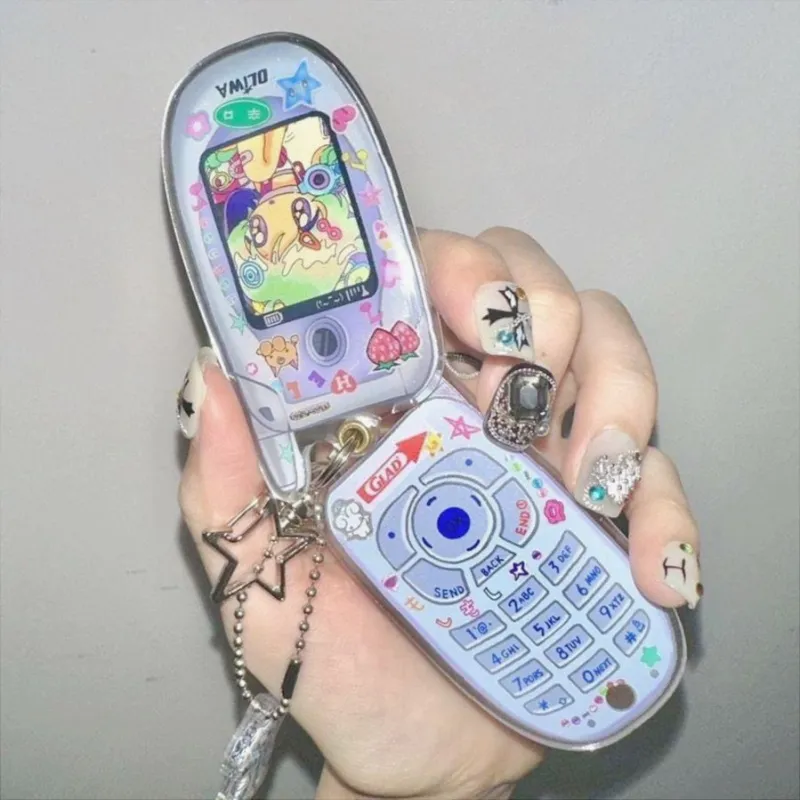
Photo: young woman Y2K fashion aesthetic flip phone vintage 2000s style, via i.pinimg.com
A Generation Haunted by a Decade It Barely Remembers
If you opened TikTok today — which, let's be honest, you probably already did — you likely encountered at least one of the following: a Von Dutch trucker hat, a "2000s playlist" mix featuring Nelly and Ashanti, a clip from Mean Girls or Lizzie McGuire, or someone doing their makeup to look like they just stepped off the set of The Simple Life.
The thing is, most of the people creating and consuming that content were in diapers when Paris Hilton was ruling tabloids. Gen Z's early-2000s obsession isn't rooted in personal memory — it's something stranger and more interesting than nostalgia. It's an inherited aesthetic, borrowed from a decade they experienced secondhand through older siblings, parents' photo albums, and the internet's infinite archive.
And it's completely taken over entertainment, fashion, and pop culture in a way that's both fascinating and worth unpacking.
How It Took Over Everything
The Y2K revival didn't start with one moment — it crept in from multiple directions simultaneously. Fashion led the charge, with low-rise jeans and butterfly clips making aggressive comebacks on Instagram and Depop around 2020-2021. Music followed, with artists like Olivia Rodrigo and Sabrina Carpenter pulling from the pop-punk and confessional pop sounds that defined the early 2000s. Then streaming piled on.
Platforms started noticing that early 2000s was a functioning search category with real engagement numbers. Disney+ leaned into Lizzie McGuire nostalgia. Gossip Girl got a reboot. iCarly came back. Saved by the Bell returned. Reality TV formats from that era — the messy, unfiltered kind that predated social media's influence — started getting revival treatment left and right. Even The Simple Life got a spiritual successor in various celebrity-roughing-it formats.
The streaming economy figured out something important: licensing and reviving IP from the early 2000s is cheaper than developing original concepts, and it comes pre-loaded with an audience. The nostalgia sell practically writes itself.
Why This Decade, Why Now?
There's a well-established theory in cultural studies that nostalgia cycles run roughly 20-25 years behind the present moment — meaning people tend to romanticize the era they were around 10 years old, or the one just before their conscious memory. The early 2000s hitting hard right now tracks perfectly with that timeline for millennials, and Gen Z has simply been swept up in the cultural current.
But there's something more specific happening underneath the math. The early 2000s represent, for many people, a pre-algorithmic world. Pre-smartphone. Pre-constant connectivity. A time when you could be bored in a waiting room without a device in your hand, when music felt like it came from somewhere rather than being served to you by a recommendation engine, when celebrity felt distant and therefore more magical.
For a generation that has grown up inside the machine — surveilled by algorithms, performing for social media since middle school, experiencing anxiety at rates that would have alarmed previous generations — that pre-digital world carries a genuine emotional charge. It's not just aesthetic. It's a fantasy of a less optimized existence.
The Entertainment Industry's Depleting Idea Economy
Here's where things get a little uncomfortable to say out loud: the 2000s revival isn't only being driven by Gen Z's organic preferences. The entertainment industry is actively manufacturing it because original ideas are hard, expensive, and risky — and nostalgia is a proven commodity.
Look at the reboot landscape across streaming right now. The number of original concepts getting greenlit versus the number of sequels, revivals, reboots, and IP adaptations tells a pretty stark story. It's not that creatives lack imagination — it's that the incentive structures of the streaming era reward the familiar. A Degrassi reboot comes with a built-in audience and press hooks. An original teen drama from an unknown showrunner is a gamble.
When nostalgia becomes a production strategy rather than just a cultural mood, you get a feedback loop: Gen Z engages with early-2000s content because it's everywhere, and it's everywhere because Gen Z engages with it. Eventually it gets hard to tell whether the audience is driving the trend or the algorithm is driving the audience.
Innovation in Disguise — Or Just Recycling?
To be fair to the artists and creators working in this space: there's a difference between empty nostalgia and genuine reinvention. Some of what's happening right now is legitimately creative. Olivia Rodrigo didn't just recreate 2002-era pop-punk — she filtered it through a contemporary emotional vocabulary that connected with millions of young people who'd never heard of Paramore. That's synthesis, not theft.
The best examples of the Y2K revival aren't imitation — they're translation. Taking the sonic or visual language of a previous era and running it through a present-day sensibility can produce something genuinely new. The problem is that for every artist doing that thoughtfully, there are ten brands, streaming platforms, and content farms doing a much lazier version.
The question worth sitting with is whether the current volume of revival content is crowding out the space where genuinely new cultural ideas would otherwise develop. If the algorithm is constantly surfacing 2000s content because it performs well, and creators are constantly making it because the algorithm surfaces it — what gets left behind?
What the Obsession Actually Tells Us
Strip away the butterfly clips and the Juicy Couture tracksuits, and Gen Z's early-2000s fixation is really a story about generational anxiety. This is a cohort that inherited a complicated world — economic instability, climate pressure, a social media landscape that monetizes their attention and their insecurities simultaneously. Looking back at a decade that felt simpler, louder, less self-aware, and more fun is a completely understandable response to that pressure.
The early 2000s weren't actually simpler, of course. They had their own crises and contradictions. But feeling simpler is enough to make them appealing as an escape hatch.
What's genuinely interesting is what happens next. Nostalgia cycles don't sustain forever — eventually the aesthetic exhausts itself, the reboots stop performing, and something new has to fill the vacuum. Whether what fills it is actual innovation or just a jump to the next decade worth mining (hello, 2010s revival, which is already quietly starting) will say a lot about the health of the entertainment industry's creative pipeline.
For now, though? Low-rise jeans are back, Mean Girls is a Broadway musical adaptation of a movie adaptation, and TikTok's algorithm is very confident you want to hear "Crazy in Love" one more time. The 2000s never really ended — they just got a streaming deal.