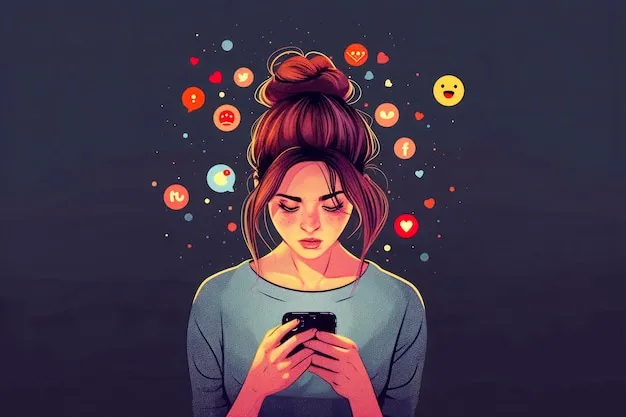
You Never Met Them, But Losing Them Still Hurts: The Science Behind Celebrity Grief
Somewhere right now, someone is ugly-crying over a YouTuber who announced they're taking a break. Someone else is processing what feels like a genuine betrayal because a pop star they've followed for a decade said something that didn't line up with who they thought that person was. And a third person is staring at their For You page in a kind of quiet mourning because a creator they watched every single night — like clockwork, like a ritual — just... stopped posting.
None of these people are being dramatic. None of them are confused about reality. They're experiencing something psychologists have studied for decades, something that's gotten dramatically more complicated in the streaming age: the parasocial breakup.
What Parasocial Actually Means (And Why It's Not an Insult)
The term "parasocial relationship" was coined back in 1956 by sociologists Donald Horton and Richard Wohl, who noticed that television audiences were developing one-sided emotional bonds with on-screen personalities. The viewer invests emotionally. The celebrity doesn't know they exist. It's asymmetrical by design.
For most of the 20th century, this was a relatively contained phenomenon. You watched Johnny Carson five nights a week, you felt like you knew the guy, and that was more or less where it ended. The intimacy had a ceiling.
That ceiling is gone now.
Today, your favorite creator might post three TikToks before noon, drop a vlog by dinner, go live on Instagram at 11pm, and send a voice note to their Patreon subscribers before bed. They share their morning routines, their therapy breakthroughs, their relationship fights, their childhood trauma, their grocery lists. The volume of access is staggering — and your brain doesn't come with a filter that says this person doesn't actually know you back.
Your Brain on Parasocial Bonds
Here's the part that feels almost embarrassing once you understand it: the neurochemical process your brain runs when you watch someone you follow online is functionally similar to what happens when you spend time with a real friend.
Dopamine gets released when their content appears in your feed. Oxytocin — the bonding hormone — can be triggered by watching someone share something vulnerable or emotionally resonant. Your mirror neurons fire when you watch them laugh, cry, or express frustration. Your nervous system doesn't fully distinguish between a parasocial interaction and a real one, especially when the content is designed to feel intimate and unfiltered.
This isn't a glitch. It's your brain doing exactly what it evolved to do: build models of the people around you, invest in those relationships, and feel the loss when they're disrupted.
The problem is that the disruption hits without any of the context that usually softens real-world relationship endings. There's no conversation, no closure, no mutual acknowledgment that something existed and then ended. One day they're in your earbuds on your morning commute; the next, they're just not.
The Algorithm Is Actively Making This Worse
Let's talk about what's happening at the platform level, because the emotional intensity of these bonds isn't purely organic. It's engineered.
Social media recommendation systems are optimized for engagement, and nothing drives engagement like emotional investment. When you watch someone's content all the way through, rewatch certain moments, comment, save, or share — the algorithm reads that as a signal to show you more of that person. Over time, your feed narrows around the figures you're most emotionally responsive to. You're not choosing to deepen these parasocial bonds consciously. You're being guided toward them by systems that benefit from your attachment.
Platforms also reward creators for performing intimacy. The "let's talk" vlog format, the "I have something to tell you guys" opener, the confessional aesthetic — all of it is optimized for the kind of closeness that keeps viewers coming back. Creators aren't necessarily being fake. But they are operating inside a system that incentivizes them to make you feel like you matter to them personally, because that feeling translates directly to watch time and revenue.
You're not imagining the closeness. You're just not seeing all the machinery behind it.
Loneliness Is the Soil This Grows In
Here's the harder conversation: parasocial relationships tend to run deepest when real-world connection is thinnest.
America has been in a documented loneliness crisis for years — one that was already accelerating before the pandemic and hit a different gear after it. The Surgeon General's office released an advisory in 2023 calling loneliness a public health epidemic. Social isolation has measurable effects on physical and mental health. And in the absence of robust real-world connection, people find what they can.
Streaming culture is extraordinarily good at filling that gap, at least on the surface. A podcast host talking directly into your ears for two hours creates a sensation of companionship. A creator who films themselves cooking dinner and rambling about their week becomes something like a presence in your apartment. For people who are isolated — whether by circumstance, geography, social anxiety, or just the grinding busyness of adult life in the US — these bonds can become genuinely load-bearing in terms of emotional support.
That's not pathetic. That's adaptive. But it does mean the grief when those bonds break is real and proportionate to what the relationship was actually doing for you.
When the Parasocial Relationship Ends
The breakup can take a lot of forms. A creator retiring. A celebrity scandal that shatters the image you'd built of them. A public figure evolving in a direction that feels like a betrayal of who you thought they were. Or sometimes just an account going quiet, no explanation, no goodbye.
What makes it particularly hard to process is the social stigma around admitting it hurts. We don't have rituals for this kind of grief. You can't call in sick because your favorite streamer had a public meltdown. You can't expect your friends to fully understand why you feel genuinely low about someone they've never heard of. The loss is real but socially illegible, which means a lot of people sit with it alone — which, ironically, makes them more likely to seek comfort in the next parasocial relationship.
What You Can Actually Do With This
Naming what's happening is genuinely useful. Understanding that your grief is neurologically real, algorithmically amplified, and connected to broader patterns of loneliness doesn't make it go away — but it does make it less confusing and less shameful.
It's also worth being honest with yourself about the role these relationships are playing in your life. Are they supplementing a social world that's otherwise full and reciprocal? Or are they quietly standing in for connection you're not getting elsewhere? Both are common. Only one is worth examining more closely.
And maybe the most useful reframe: the fact that you can form deep emotional attachments, that you can feel loyalty and grief and genuine investment in another person's wellbeing, is not a flaw. It's one of the better things about being human. The streaming age just found a way to point that capacity at a screen and call it content.
You're not broken for grieving someone you never met. You're just a person living in a world that figured out how to monetize the part of you that needs to feel close to someone.